
The price is right
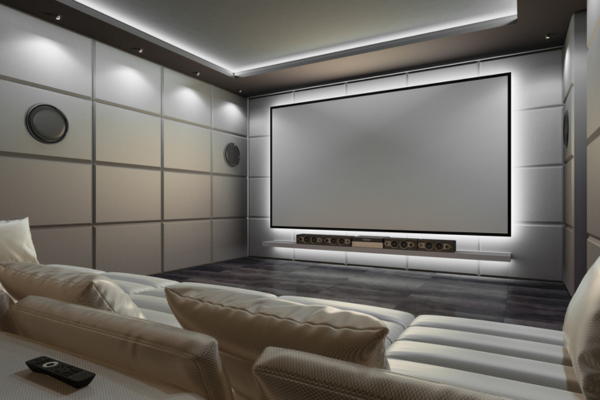
How do you set the price for your products and services? Anthony Grimani and Chase Walton explore the intricacies of how to set prices and budget as an integrator.
Budgeting and quoting a good-quality home theatre can be a really challenging process. First off, the client either doesn’t want to tell you what they have allotted for the system or is entirely unaware of what the true price should be.
ADVERTISEMENT
They may have done a ChatGPT search and were misled into thinking that they just had to budget $10,000 to get their own version of a Hollywood director’s screening room…
In reality, a home theatre is not merely a system of audio/video/control hardware. Instead, it is a whole room, a whole environment with carefully considered and engineered solutions that aim to reproduce movies, TV shows and music so well that they fully transport you. This whole solution comprises labour in many disciplines, requiring lots of creativity, experience, project management and skill.
So, how do you accurately price all of this on a spreadsheet or estimating program? And how do you present it to the client who may be expecting the dollar value to be merely a few thousand dollars, since after all, it’s just a big TV with a few speakers, right?
Here’s a concept that will help you through the budgeting and discussion process. If you are working on a new build or a remodel project, know that all the other service providers are usually quoting their labour and materials as a price per square metre. The grand total should add up to the target originally established by the architect and builder.
So, you should ask this builder or ask the end user about the target price of the build and try to match that for the theatre.
Say, for example, that the project is in a luxury apartment with views directly onto the bay. You find out that the build cost is $12,000/m2, and with the furnishing, the total is more like $15,000/m2. If you are bidding a theatre that is 40m2, the total price of this room should be 15,000 x 40 = $600,000, right? Otherwise, it’s not in line with the general quality throughout the property.
To be clear, that’s the price for the whole room. That includes the raw build, specialty wall/floor/ceiling structures, interior décor, acoustical treatments, sources, sound system, video system, control system, engineering, programming, commissioning and, of course, the installation labour.
I suggest simply presenting it this way: “Do we all agree that the project is going to come up to the same amount per square metre as the rest of the property? Okay then, we will come back to you with a proposal that matches that target.”
At least now you have a budget! Of course, it’s not all yours; about half of it is directly related to construction. But in the case of this example, you are providing $300,000 for all the items relating to the theatre. This includes furniture, and all the products and services I mentioned above, but so far, you never had to discuss the price of a decent projector, the price of a good quality immersive audio processor or the price of a superb and dynamic speaker package. If, in fact, you had started with the idea that the theatre was going to cost $300,000, you would have gotten the common reaction that goes: “That’s the price of a new Ferrari; are you crazy?”
But instead, you are discussing this as a real estate investment, budgeted at a value based on surface area, just like the plumber, electrician, flooring and other trades are used to doing.
In your mind, you are the hero of high-quality home entertainment. In their mind, you aren’t much more than another trade, providing labour services and materials. Yes, your stuff is way more entertaining than what’s in the bathroom, but during the design and construction phase of a home, all minds are set on surface-area budgets.
Your next step is to figure out the products and services that match up to that budget, using all the engineering and specifications supplied by the manufacturers, and applying CEDIA’s Recommended Practices (either RP1 and/or RP22). However, you don’t necessarily have to break out all the details in your bid. In most cases, the client doesn’t really want to see the specifics; they just want to know that the overall budget is what was agreed to in the original meeting. Do you think that the plumber shows a listing of every meter of pipe, junction, valve, etc.?
In deciding what the cost structures will be for the audio portion, you will need to think about these parameters:
- Sound pressure levels: Just how loud the system will go up to, and what the client’s expectations are, will both have a big effect on the system size (it’s similar to horsepower in cars).
- Channel count: You can do a simple system with 5.1 channel sound, but that is so very 1995 when that was introduced. A 7.1 channel system is so very 2000, and if you want to be current, you need to think in terms of at least 7.4.4 (seven main speakers, four subwoofers and four top speakers).
- Sound quality: While this can be very subjective, there is no doubt that anyone can hear the benefits of smoother frequency response, extended low frequency extension and even sound power and dispersion. Here again, what are the client’s expectations and experience from previous systems?
CEDIA’s new RP1 standards will help you navigate the engineering process on all of these items.
For the video system, the screen size and illumination levels will influence pricing, as well as contrast ratios and colour gamut ranges. You can engineer for theoretical perfection at high costs, or you can establish where some slight compromises can lie and adjust pricing accordingly. Some of the more common Asian-made projectors paint a very decent image for reasonably affordable pricing. For top-tier “professional” grade presentations, you will at least double the pricing with some of the European brands.
Where things get a bit complicated is figuring out the variable costs. That’s not the AV/control hardware and labour, it’s the interior construction and décor. Those numbers can have very wild swings depending on the grade of finishes. Woodwork, stretched fabrics systems, seating, carpeting and lighting all have the same wide cost ranges as speakers do.
The issue is that, at the beginning of the project, you don’t yet know too much about the client’s expectations and specifications for interior architecture and décor. For that reason, there is now a set of purveyors of interiors who have options at various prices per square metre and with a range of styles.
Set up relationships with some of these and get them involved as a partner. You can either subcontract them or refer them to the project if the builder/general contractor wants to have control over all service providers.
Armed with the parameters and prices listed above, you can confidently go to the presentation meeting with the client and offer up a system choice that matches what was agreed in the initial interview. Start with: “As we had agreed when we met last month, we put together a system that adds up to $600,000 for engineering, construction, décor, AV, automation and installation. Here are some of the details…”
The clients and other stakeholders will appreciate that you are following a straight line in the bidding process, and will be much more inclined to b
-
ADVERTISEMENT
-
ADVERTISEMENT
-
ADVERTISEMENT
-
ADVERTISEMENT