
Forgotten features
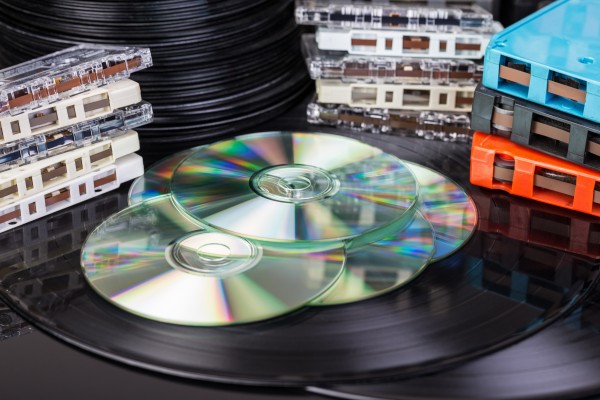
Integrators are always on the lookout for the next (or last) great media format. Stephen Dawson explores some of the forgotten formats.
Over the past fifty or more years, there have been many experiments in consumer entertainment media. Some have succeeded, briefly or for decades. Others have passed with barely a ripple of notice.
ADVERTISEMENT
We’re not talking about those – DAT, Digital Compact Cassette, et al. What we’re talking about here are features, sometimes once used, sometimes not, in several media formats, that are now largely forgotten. Let’s remember some of them.
The LP
Ah, the early 70s! It was in 1972 that I heard for the very first time a sound system that could properly be termed “high fidelity”. But it wasn’t stereo. My friend took me into his loungeroom (or, more properly, his parents’ loungeroom) and played The Doors’ “Riders on the Storm” through the four Sonab V1 speakers in the room corners. Thus, I heard high-fidelity quadrophonic sound.
It did not last. Perhaps the idea of four speakers was too much. Given that most people didn’t even set up their stereo speakers properly, a mass market seemed unlikely.
But what most likely killed it was a format war, not between two systems, but three: CD-4, SQ and QS. Imagine: Three incompatible systems, and two with the most confusingly similar names possible.
The first was the most pure, using a high-frequency carrier signal for the extra two channels, while the other two “matrixed” the extra content into the main channels (something like the original Dolby Stereo did a few years later).
But the first was unreliable and needed an expensive Shibata stylus and a compatible cartridge. The other two achieved only a modest front/rear separation of about three to six decibels. All needed decoders and, of course, extra amplifier channels.
So confusion was rampant. For example, checking just now, it seems that The Doors were never released in any of those formats! What was that I was listening to?
The compact disc
We all know that CDs have tracks, of course. But they also (potentially) have a kind of sub-track, called the “index”. That is, two levels of organisation. This was pretty cool. I had a Denon CD player for a while, which displayed which index you were in, along with which track was playing.
But that was not my first CD player. Before that, I had a Sony, and before that, the original Sony CDP-101. Neither of them could access specific indexes.
Indeed, very few players ever could. That would not be a problem for the almost complete catalogue of all CDs ever produced, which didn’t use indexes. But almost is not “all”.
My twin-disc CD of the original cast of Andrew Lloyd Webber’s The Phantom of the Opera has only two tracks. One on disc one, one on the other disc. That on disc one is 54 minutes and eight seconds long. Likewise, my 1982 CBS Masterworks CD of Glenn Gould’s re-recording of Bach’s Goldberg Variations, which is an Aria with 30 variations, is one track of 51 minutes and 19 seconds.
All that’s great for immersion, but not the best for skipping to my favourite variation or song.
This next one is so obscure that both Grok and Claude initially denied it when I checked. Only Gemini admitted it: The original Sony/Philips Red Book specification for the CD provided for an option for quadraphonic sound. That would be four discrete channels of sound. I knew about it because that was one of the things that was mentioned back in the 1980s when the CD was being launched. When I pressed Grok on the matter, it did reluctantly admit this.
To be fair, this was never implemented. It would have required enormously redesigned CD players. There were some matrix-style four-channel CDs in Japan, apparently, in the 1990s. But that’s another matter.
I have a Chesky test CD with some tracks Dolby Pro Logic encoded, which can be decoded by a standard home theatre receiver. If it has two channels, you can matrix in additional content.
When the initial Red Book was adopted by the International Electrotechnical Commission in 1987, there was no further mention of four-channel sound.
I have never understood this, but apparently, the design engineers for the CD were worried about noise being a problem. Well, the first Philips CD player only did 14-bit decoding, which put the noise floor at -84dB instead of -96dB. Even that was many decibels lower than other formats. Still, they provided an optional pre-emphasis/de-emphasis cycle in the specification. If the CD producer used it, they would boost the treble (up 10dB at 20kHz) before converting the analogue to digital. A flag in the CD data would tell the player to cut the treble when decoding back to analogue. The result would be a reduction of high-frequency noise of up to 10dB.
It was rarely used, but it was on some early CDs. In normal use, you’d never notice*, but if you rip one of those CDs, there won’t be any indication in the resulting PCM that de-emphasis is required**. When you play back the file, it’s going to sound harsh.
In 1996, a new feature was added to the CD: CD text. This allowed text information about each track to be stored on the CD and displayed. Quite a few CD players, even today, display what’s available. That information was album, artist, track title, songwriter and… lyrics!
It was a nice thought. But space was a problem. You’d think with up to 800mb of space on a CD (in the later, expanded versions), there was no way you’d not be able to fit a few kilobytes of text on, but for technical reasons, it couldn’t be placed where audio might otherwise be. It had to be squeezed into other unused nooks and crannies on the CD. Lyrics were often just too long to fit. And, in any case, by then the internet was becoming much more of a thing and lyrics were becoming quite easily accessible online.
DVD
If you have an old, full-function DVD player, with a decent remote control (not those slips of things that Samsung, for one, frequently provides), you may see a key on the remote labelled “angle”. There is a provision in the DVD specification for the DVD authors to include multiple versions of a scene.
Typically, some kind of marker would show in the corner of the screen, you could press the angle key, and the picture would switch to an alternate view.
The alternate view could just be the same thing from a different angle, or could be something completely different. This was an extremely rarely provided feature. So much so that in my database of detailed information about a couple of thousand DVDs and Blu-rays, I didn’t even include a check box for the feature.
The database informs me (filtering for “angle” in the features box) that I came across just one DVD with angles: Metallica: Cunning Stunts, which had “five angles on three tracks on Disc 1”. They were pretty clunky, anyway. You’d press the key and the angle would switch, after a second, or two… or three.
Blu-ray
In the rush to get Blu-ray out (remember HD-DVD?), the first players were introduced under the grace period. That is, they didn’t have some of the basic features intended for Blu-ray. When those features did appear, they were labelled BonusView players.
Perhaps the main feature that was added was picture-in-picture. That allowed things like talking-head commentaries, artwork and all manner of other things to be shown in a window as the feature plays. That was during the Blu-ray boom, when the movie makers were trying to get you to buy discs, and they figured the more features, the better. They are rarely, if ever, provided on recent discs, but such content on older discs is still supported by Blu-ray and UltraHD Blu-ray players.
While things were booming, BD-Live was introduced. These players could connect to the internet and show, for some discs, specific additional content for the disc. I experimented with these on occasion, back in the day. Many simply took you to a landing page for the movie company, which showed promotional material for other movies. But even those that provided potentially useful content were kind of a pain to use. I was stuck for most of those years with a waiting-for-the-NBN 6Mbps broadband, and the Blu-ray players themselves were not the hottest of internet hardware.
But that was then, and this was now. It has been many years since any of the BD-Live features on my old discs have worked – there’s nothing at the other end. And, of course, no BD-Live content is released for new discs.
For a few years there, Blu-ray 3D was a central focus of my home entertainment writing. Did the TV use active or passive eyewear? How effective were they? Was the ghosting (leakage between left and right eyes) intrusive? Did the fake 3D generators do a decent job (some were actually quite impressive)?
I just checked a couple of current UltraHD Blu-ray models, one from Sony and one from Panasonic (the same model that I bought years ago… they don’t flip the models over anymore), and both claim to still support Blu-ray 3D. Which is great! If, that is, you have an old 3D TV. It seems that you can’t buy new ones.
And to finish off, let me give you a little easter egg in the form of a Sony easter egg. With most Sony Blu-ray discs, if you go to the main menu and key in 7 6 6 9 (the numeric code for Sony), the disc will display a set of test patterns. Most are a one-minute-long sequence of stills, but the ones on Sony UltraHD BDs are nearly five minutes long, and show patterns better designed to demonstrate the higher resolution colour and grey scales of the format.
*Or will you? After I thought I’d finished this article, I explored this more, and I’m finding some recent gear that simply does not act on the pre-emphasis flag.
**AI tells me that some ripping software does apply some form of de-emphasis, including Exact Audio Copy. But when I checked an EAC rip with one that I am confident did not include de-emphasis, the frequency balance was the same. So… I don’t know.
-
ADVERTISEMENT
-
ADVERTISEMENT
-
ADVERTISEMENT
-
ADVERTISEMENT