
A cold, hard look at vinyl
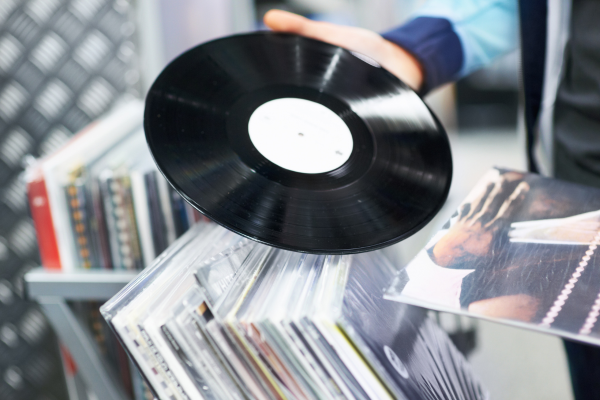
If you get into vinyl, you might be surprised (or depressed, even) by how much noise is on them. Stephen Dawson clears up a few misconceptions and explores the benefits of vinyl, warts and all.
The debate about which is better – vinyl or digital – rages on in the high-fidelity community. It’s a debate that is destined to continue forever, it seems, because it is one that can never be resolved with any certainty.
ADVERTISEMENT
In theory, at least, you can conduct scientifically valid tests about all kinds of things in audio reproduction. You can test whether people prefer, or can even distinguish the sound of, high-resolution digital music compared to standard (eg. CD-standard) material. Whether a $10,000 DAC sounds better than a $500 DAC. Or whether expensive interconnect cables improve the sound quality.
To do that, you assemble a sufficient number of test subjects – listeners – and conduct a good number of double-blind test listens and have the people mark test sheets as to which test playback is which. If you get enough positive results with enough tests, properly conducted, you will achieve statistical significance. Which means that it’s 5% or less likely that your results are spurious.
The “blind” part is essential. Double blind means that neither the subject doing the listening nor the experimenter, who is gathering the data, knows which of the items being tested is in use on each occasion. Is it the fancy speaker cable or the $1.25-a-metre stuff?
Consider me a sceptic.
Back in the 1980s the long-since-departed US magazine Stereo Review published several issues performing such tests on such things as speaker cables, amplifiers and so on. The most interesting thing about the tests was that they first did the A/B comparisons unblinded. Most subjects were able to wax lyrical about the differences. But when they were repeated with the subjects blinded, the responses were entirely random.
So, you can do those tests, and you’ll find that the only people who believe your negative results will be those who are already sceptical. The true believers will nitpick the tests and maintain their positions.
And when it comes to vinyl vs digital, you can’t even do that test!
With vinyl, this doesn’t work
One of the requirements in doing those blind tests is volume matching: the two devices must be identical within 0.1dB. Even though a 1dB difference in volume is barely noticeable, it typically sounds just that little bit better.
But you can’t match vinyl sound with digital sound for several reasons, and volume levels are the least of them. The most obvious difference is that vinyl is noisy. It is a very rare vinyl record that, brand new out of the sealed sleeve, doesn’t have at least a couple of audible clicks and pops. Sometimes more. I recently published an article on record cleaning products in which I described how one brand-new record skipped on all my turntables until I used a special cleaner.
But even if a vinyl record is completely defect-free, it’s still noisy by modern standards. A CD has a noise floor of better than -90dB (24-bit audio has, with fairly modest equipment, a noise floor below -120dB). A perfect vinyl pressing is lucky to have a noise floor of -60dB.
Then there’s channel separation. Your CD-quality digital recording, played back through even inexpensive equipment has left-right crosstalk of better than… -90dB across the full audio bandwidth! With an excellent vinyl record and a first-class cartridge in the turntable, you’ll get -30dB at 1kHz, and worse at most other frequencies.
In the bass especially, channel separation is zero, because bass frequencies were routinely mixed down to mono for LPs, simply because of the physical limitations of laying down bass on vinyl. Remember, with the RIAA EQ curve, the bass recorded on vinyl is reduced by 20dB compared to the mid frequencies.
Which brings us to mastering. Mastering engineers for vinyl frequently tweaked the upper midrange and lower treble, “sweetened” it, to account for weaknesses in common LP playback systems. Indeed, some of the bad reputation that early CDs acquired was because these LP masters were used for some CDs, making them sound harsh. More generally, mastering LPs was more of an art than digital mastering. Fine mastering engineers had broad experience in balancing play time, track order, EQ, bass extension and such for good sound from vinyl.
And if the masters are different, you cannot compare like with like.
Digital, by contrast, can sometimes be compared. Last year, I went through a chunk of my CD collection and identified ten of them that clearly used the same masters as the digital versions on the TIDAL streaming service.
I ripped a song from each of those ten CDs and recorded the matching digital stream for those songs from TIDAL, then subtracted one from the other. That showed that for seven of those tracks, every single sample of the 40-odd million samples in each track was identical in both (the others differed by a handful of samples).
Those are comparisons you can make. Where the mastering is different, blind comparisons are impossible.
Realism with vinyl
Don’t get me wrong, vinyl has its charms. It isn’t for no reason that it is coming back.
Back in the early 1980s, I bought a CD player that likely came from the first container load to arrive in Australia from Japan. I relished the freedom from that noise. I sold a bunch of my LPs then to finance CD purchases. But I still kept more than a hundred.
My Luxman turntable started playing up, so I didn’t bother with vinyl for ages, but around 2010, I started to get back into it. With age came more tolerance of noise. And also, the realisation that some of my LPs weren’t available in digital formats.
I bought a few new albums – typically reissues of older music, some remastered. But for the most part, I’ve been restocking with second-hand music.
The virtues of vinyl are well rehearsed. First, and most obviously, is the inventiveness and style of many album covers. In the 1970s, I purchased Jethro Tull’s Thick as a Brick. Its cover folds down into a multi-leaf fictional newspaper from a small English town, covering a controversy related to the album’s lyrics. That was impossible with the CD, let alone streaming.
And as to sound, I can confidently state that a vinyl album in good condition sounds… different to the digital version. Apart from the noise, to the extent that you can ignore it, those differences remain. Sometimes there is a sense of roundness to the music, particularly in the stereo image. Most likely, this is due to the inevitable phase discrepancies introduced by playback systems, and the warmth added by the relatively high levels of harmonic distortion (typically 1%, but mostly first-harmonic and thus pleasant to the ear).
But LPs are a fragile format. Remember, the music is extracted by dragging a sharp stylus of one of the hardest materials – diamond – through a modulated groove in vinyl, which is really quite soft. The modulation makes the diamond move up and down and side to side, quite fast, up to around 30 centimetres per second. Wear on vinyl is inevitable. Good practice can merely minimise it.
Good practice means keeping dust from the grooves and playing back on a properly set-up tone arm and cartridge, with appropriate antiskating settings, and the tracking weight complying with the cartridge manufacturer’s recommendations.
Purchasing tips
There is really only one tip for buying new LPs: Keep your receipt. The album I mentioned earlier wasn’t the only one I’ve purchased that was unplayable, straight out of the shrink wrap.
But most of the vinyl I buy is second-hand. For which there are many tips. The first one is: Lower your expectations. If you buy from a shop that grades the records, or from a source like discogs.com, you might think you’d be on safe ground buying a record graded VG+ or Pristine. I’ve bought a few, and as far as I can work out, those ratings mean at best that the vinyl looks unmarked. These vendors don’t play the records to check. Expect there to be clicks and pops. If you can’t tolerate them, don’t bother buying.
Second second-hand tip: Be aware of the type of record you’re considering. No matter how much you love “I Hear Those Church Bells Ringing” by Dusk, it’s not a good idea to buy an old copy of 20 Explosive Hits ’71. Odds are that a compilation album has been played dozens or hundreds of times by a teenager on a cheap record player with a short tone arm, worn stylus and very heavy tracking weight. It may sound bearable on the first few tracks, but the final tracks on each side will likely rattle with noise due to awful wear.
Third: Classical music is problematic on vinyl, simply because any clicks and pops tend to be more obvious because the music is, on average, quite low in level.
Fourth: Jazz purchases have a higher probability of decent quality. Jazz enthusiasts tended, on average, to use better equipment and take more care of their LPs. ME
Fifth: Inspect the surface of a potential purchase. Light scuffing on the surface may well be inaudible, but deep scratches will be all too intrusive. A little light dust over the surface may be okay – after you’ve cleaned the record. Fingerprints suggest a likelihood of poor handling. A name written on a record cover can suggest that the former owner took care. Likewise, if it looks like the album has long had a plastic outer sleeve.
Sixth: Even Vinnies and Salvos sometimes can turn up unexpected gems. Just remember the foregoing tips.
Seventh and finally: Be careful playing a second-hand purchase the first time. I use a different turntable with a good magnetic cartridge, for which I can purchase a new stylus for $50. I don’t want to take a chance on a record destroying the stylus on my other turntable, which uses a $1,800 moving coil cartridge.
I hope all this hasn’t been too depressing. The problem is that in the great bulk of material written about vinyl, these issues simply aren’t mentioned. If you’re finding noise and damage on your vinyl records irritating, and wondering if it’s you that’s doing something wrong, be assured that it isn’t you. It’s everyone. But few mention it.
-
ADVERTISEMENT
-
ADVERTISEMENT
-
ADVERTISEMENT
-
ADVERTISEMENT