
Researchers at La Trobe University create electricity-conducting material for smartphone and wearable devices
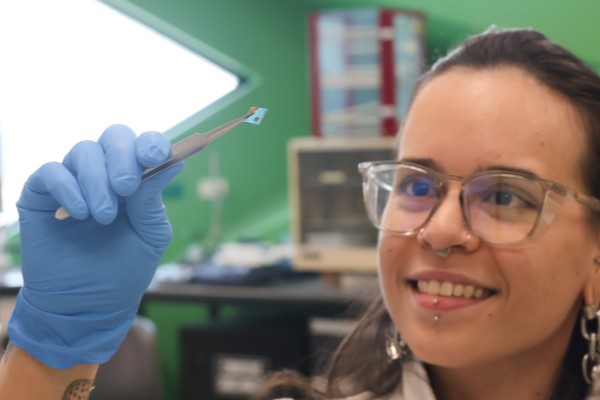
Researchers at La Trobe University have produced an electricity-conducting material that can revolutionise smartphones and wearable devices.
The new technique uses hyaluronic acid which gets applied directly onto a gold-plated surface to create a thinner, more durable film or polymer to conduct electricity in devices like biosensors.
ADVERTISEMENT
Lead researcher associate profession Wren Greene says the technique can lead to significant improvements in the function, cost and useability of devices like touchscreens, medical devices and wearable biosensors.
“Conductive polymers as we know them were developed nearly 50 years ago and although they’re exciting, they haven’t lived up to their potential in that time. They’re often difficult to fabricate, as thin films don’t conduct electricity very well, aren’t transparent and can have highly variable properties,” he says.
“Through our method, called ‘tethered dopant templating’, we’ve created a robust way of making a conductive polymer that is flexible, durable, can conduct electricity as well as metals and is easily reproduced, so it’s scalable.”
Conducive polymers are synthetic materials which are used on all smart devices from touch screens to medical devices that regulate a patient’s drug dosage and delivery.
The end material, called 2D PEDOT, isn’t visible and it’s more powerful than other materials, giving the potential to have a major impact on the future of smart, sensor-based devices.
“We were very excited to find that not only did the polymers form when we tethered directly to the gold, but that these polymers were thinner, more powerfully conductive and almost foolproof to reproduce,” lead researcher and PhD candidate Luiza Aguiar do Nascimento says.
-
ADVERTISEMENT
-
ADVERTISEMENT
-
ADVERTISEMENT
-
ADVERTISEMENT