
How integrators can help shape the next generation of filmmakers
From hands-on camera work to virtual production, Australia is building a pathway that nurtures local filmmaking talent from the classroom to the industry. Casey McGuire explores where integrators can step in.
Australia’s arts and film sector is experiencing a period of significant growth, driven by rising interest and engagement across the country. There are 42 institutions in Australia that offer courses related to film and television, eight of which offer master’s degrees in film and television, according to IDP Education.
ADVERTISEMENT
Outside of tertiary education, secondary schools are following the trend with several schools now featuring dedicated Performing Arts Centres that provide professional training in dance, drama and film, for example, Belmont High School, Mill Park Secondary College and Northcote High School.
This growth reflects a broader commitment to nurturing local talent and supporting Australian filmmakers, giving creative professionals the skills and opportunities to succeed without needing to look overseas. This doesn’t necessarily mean feature-length films, but as video content continues to grow in demand, the next generation is more prepared to fill the need.
By investing in its own talent, Australia is building a workforce capable of producing high-quality content locally and competing on the global stage.
Despite this progress, challenges remain. Australia is only beginning to fully recognise the importance of comprehensive film and production education. Hands-on experience with cameras, editing software and live productions is becoming increasingly essential (and quite frankly, the only way to hone your skills).
Industry experts like Sony senior product manager – digital imaging, Alyssa Young, stress the importance of future-proofing, staying flexible and maximising in-house production.
Using local talent and resources reduces costly travel and setups while allowing teams to integrate emerging technologies such as virtual production, a field accelerated by the COVID-19 pandemic and expected to define the industry’s future.
“Australia became a popular destination for international feature films because of our flexible lockdown rules and diverse locations, from deserts and beaches to rainforests and snow. We have everything filmmakers could want,” Alyssa says.
Australia now has full production teams eager to produce projects locally, and staff, crew and other professionals must be well-trained to ensure production remains sustainable.
“We shouldn’t be outsourcing for talent when we have all these talented people right here on our doorstep,” Sony territory manager – business and institutional solutions Shanelle Stokes says.
“It’s about ensuring they have access to education from an early age and a clear path into university programs that include professional production suites. That prepares them for the real world once they graduate.”
While Australian institutions are beginning to catch up, there is still a sense that the importance of the sector is not fully appreciated. In New Zealand, inspired by the success of the Lord of the Rings films, among other major productions, universities offer extensive facilities where students learn everything from directing to producing.
Australia must ensure its film education programs align with global standards to cultivate a workforce capable of creating competitive, world-class content.
Until students are sure filmmaking is their passion, they often cannot afford to invest in professional equipment. Universities provide fully equipped suites where students can borrow cameras and create complete films, offering an inspiring, hands-on learning experience.
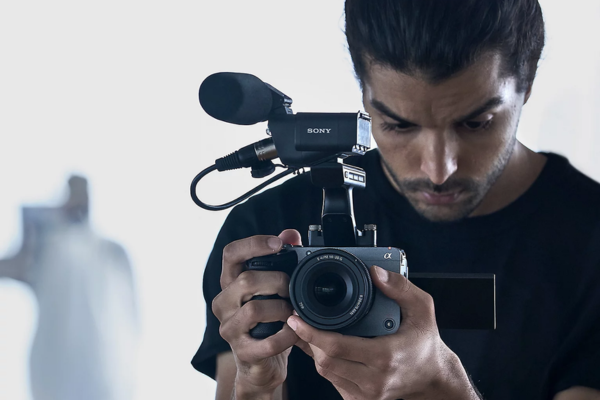
Most tertiary-level film schools in Australia use Sony cinema line cameras, starting with the FX30, an entry-level crop-sensor cinema camera. Many universities have fleets of at least ten FX30s and as students advance, they gain access to higher-end models such as the FX3 and FX6. The FX6, a higher-end model, is a professional production camera widely used across the industry. The consistency of camera models between secondary and tertiary schools ensures students transition smoothly to university, learning on equipment similar to what they will use professionally.
Editing software is another essential component. Most schools provide access to industry-standard suites like Adobe Creative Cloud, ensuring students gain practical skills in post-production. Interchangeable lenses also play a critical role, allowing students to experiment with different focal lengths and develop a creative eye for production.
Shanelle emphasises the importance of early exposure: “No matter what area a student focuses on, understanding acting, cinematography and production make them better in whichever part of the industry they choose. Introducing these options in high school allows them to identify their passion and refine it in university programs.”
Many schools are giving students real-world experience within their own AV teams. Graduating students are often relied upon to handle live productions, film drama performances or cover school assemblies, rather than outsourcing these tasks. This hands-on experience helps students develop practical skills and prepares them for professional work after graduation.
“Australian universities are investing in virtual production suites. This saves money that would otherwise go to outsourcing and allows students to progress from learning photography to live production and full filmmaking courses, all while keeping talent and jobs within Australia,” Shanelle says.
Institutions like Macquarie University, the Australian Film, Television and Radio School (AFTRS), University of Technology Sydney, Sydney University, Flinders University, Bond University and Griffith University are leading the way, many having invested in virtual production technology several years ago.
At the same time, the local industry is expanding, with new studios opening across the country from Perth and Owen Park to Russell Crowe’s Coffs Harbour studio and a proposed Central Coast facility, further nurturing talent beyond the classroom.
Behind every successful film education facility or virtual production suite is a systems integrator translating ambition into reality. As schools and universities invest in advanced filmmaking technology, integrators play a critical role in designing, installing and maintaining complex production environments.
From camera systems and lighting to LED walls, control rooms, networking and post-production workflows, these installations require careful planning to ensure each component works seamlessly together. Integrators must also consider the educational context, designing spaces that are robust, intuitive and flexible enough to support students at different skill levels, while still reflecting real-world production environments.
This expertise becomes even more important as institutions adopt virtual production and in-house broadcast capabilities. Integrators are responsible not only for selecting the right technology but also for future-proofing systems so they can evolve alongside rapidly changing industry standards. That includes accounting for firmware updates, software compatibility, scalability and ongoing technical support, elements that are often overlooked when equipment is purchased in isolation.
While Sony supplies equipment, installations are carried out by experienced systems integration partners, Shanelle explains: “You can’t just order this online and hope it comes together. From lenses to screens, software and all back-end systems, our partners handle installation and fine-tuning. They also provide ongoing support, including firmware updates and backup assistance.”
“Reach out to a professional organisation, have them conduct a site visit and discuss your goals. If you’re unsure, ask what has worked elsewhere and what students respond to at different stages of their journey.”
By combining investment in education, hands-on experience and state-of-the-art technology, Australia is steadily building a film industry capable of keeping talent local, producing high-quality content and preparing the next generation for a global stage. With the right training, facilities and support, the country is poised to become a hub for emerging and established filmmakers, ensuring a sustainable and thriving creative sector for years to come.
-
ADVERTISEMENT
-
ADVERTISEMENT
-
ADVERTISEMENT
-
ADVERTISEMENT