
Breathing new life into buildings
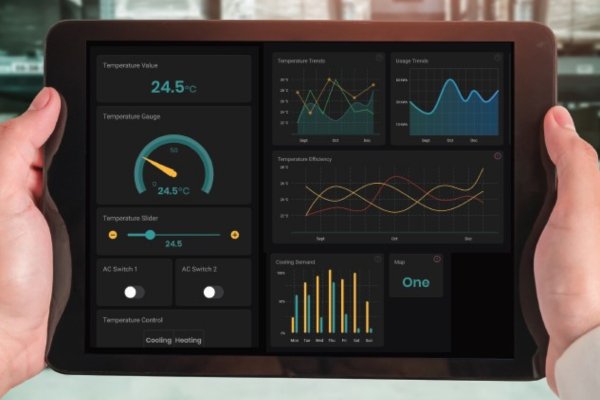
Even in Australia’s clean air, smart monitoring and control technologies are allowing integrators to create healthier, more efficient indoor environments. Casey McGuire writes
Australia is often held up as a country with enviably clean air. Compared to many parts of the world, our outdoor air quality is generally high, helped by lower population density and fewer heavily industrialised zones. Yet, despite this, air quality, particularly indoors, is becoming an increasingly important topic of conversation. New products, platforms and monitoring systems are raising a simple question: If our air is already ‘good’, why the growing focus on improving it?
ADVERTISEMENT
The answer lies in where Australians spend their time. Offices, schools, retail spaces and homes account for much of our day, and indoor air quality can be affected by everything from ventilation and humidity to occupancy levels, pollutants and airborne pathogens. Events like severe bushfire seasons and the COVID-19 pandemic have only accelerated awareness, pushing indoor air quality from a background consideration into a visible part of how buildings are designed and managed.
In 2025, Australia took a leadership role in a global United Nations pledge recognising healthy indoor air as essential to wellbeing. While largely symbolic, the move reflects growing momentum around indoor air quality and reinforces what the technology sector is already seeing on the ground: Air quality is no longer an optional extra, but an expected part of modern buildings.
One factor increasingly shaping this conversation is building design itself. Australia’s building regulations limit window openings in multi-storey buildings to 125mm to help prevent falls. While essential for safety, these restrictions can significantly reduce natural ventilation.
Research commissioned by Amplimesh and conducted independently by Western Sydney University and the University of Technology Sydney highlights the unintended impact this can have on indoor comfort and wellbeing. The study, The Role of Ventilation in Occupant Wellbeing, found that restricted windows in student housing led to higher carbon dioxide (CO₂) levels, poorer airflow and reduced comfort.
ASHRAE identifies 1,000 parts per million (ppm) of indoor CO₂ as a commonly used benchmark for acceptable bedroom air quality. Rooms with restricted windows consistently approached this upper limit, while rooms with greater ventilation stayed well below it and recorded noticeably higher occupant wellbeing, particularly in the mornings when outdoor air was cooler and fresher.
These findings build on earlier research showing that many Australian schools also operate below recommended ventilation levels, as reported in a 2019 RMIT University study. Across ten Victorian schools, classroom CO₂ levels frequently exceeded guidelines, while long-term monitoring in 2023 revealed that seven in ten classrooms remained under-ventilated.
Poor ventilation has also been linked to Sick Building Syndrome (SBS) which refers to situations where building occupants experience acute, non-specific health issues, such as headaches, fatigue and eye/throat irritation. The Australian Government’s Department of Health recognises improved ventilation as a key factor in reducing the spread of respiratory disease.
Together, this research highlights a longstanding challenge for architects, facility managers and regulators: How to balance essential safety measures with the need for healthier indoor environments.
While some studies explored alternatives such as protective window screens that allow full opening without increasing fall risk, the broader takeaway is clear: Relying on natural ventilation alone is increasingly difficult in modern buildings. This reality is accelerating demand for smarter, more responsive mechanical and monitoring solutions.
As a result, air monitoring and control technologies are moving beyond niche applications and into the mainstream and it presents opportunities for integrators working in commercial environments.
General Australia (formerly Fujitsu General Australia) general manager, product and strategy Kyle Rafter explains how modern systems are designed to actively measure and respond to indoor conditions rather than simply circulate air: “Our smart home air monitoring and control system combines intelligent sensors, WiFi connectivity and app-based controls to improve comfort and indoor air quality.”
General Australia’s anywAiR iO platform delivers real-time air quality monitoring through a connected network of Internet of Things (IoT) sensors and controllers.
This growing focus on air quality is also reshaping the role of HVAC systems themselves. In buildings, heating, ventilation and air conditioning can account for around 40% of total energy use, making them a critical point of optimisation as businesses face rising energy costs and increasing pressure to decarbonise.
Rather than treating air quality and energy efficiency as separate challenges, manufacturers are increasingly combining the two through intelligent, data-driven systems.
LG Electronics’ Multi V i Variable Refrigerant Flow (VRF) solution is one example of this convergence in the Australian market. Powered by an AI engine, the system continuously adapts to changing environmental conditions and usage patterns to balance indoor comfort, air quality and energy consumption.
LG Electronics ANZ managing director Dan Lim explains that the aim is to deliver measurable efficiency without compromising the occupant experience.
“It represents a significant leap forward in HVAC technology, delivering on business concerns around efficiency and comfort. It’s about helping customers achieve their energy saving goals while delivering premium air solutions across the HVAC sector,” he says.
Features such as AI Smart Care and AI Energy Management allow systems like Multi V i to analyse real-time temperature, humidity and operational data, adjusting airflow and performance to avoid unnecessary energy use. For sites without dedicated energy management systems, this type of built-in intelligence offers a practical way to control consumption while maintaining healthy indoor environments, an outcome that aligns closely with the goals of air monitoring platforms such as General Australia’s anywAiR iO, which is also used in residential spaces.
This is where the conversation becomes particularly relevant for integrators. As buildings become smarter and more connected, air quality systems are no longer standalone appliances. They are networked technologies designed to integrate with the same platforms that manage lighting, AV, security and climate control.
“The anywAiR iO system can integrate with existing building management systems and other automation technologies,” Kyle says.
“Using wireless LoRa communication and the Rubix Compute gateway, data from HVAC systems and environmental sensors can be aggregated and analysed to support demand-controlled ventilation, fault detection and energy optimisation.”
In practical terms, this means integrators can help clients not only see what’s happening in their buildings, but also act on it in real time. Intelligent HVAC platforms like LG’s Multi V i extend that capability further, enabling predictive energy control, real-time monitoring and consistent comfort across large or complex spaces. For integrators, these systems represent an opportunity to design holistic solutions rather than piecemeal upgrades.
Uptake of this technology is being driven largely by the commercial sector, where energy efficiency and compliance requirements are becoming more stringent. Kyle notes that systems like anywAiR iO are increasingly being adopted in response to NABERS requirements, which mandate periodic energy ratings and sub-metering for many Australian buildings by 2030. At the same time, businesses are recognising that healthy indoor environments support staff wellbeing and productivity, benefits that are increasingly expected rather than optional.
Real-time air quality data, intelligent HVAC control and AI-driven energy management give integrators the tools to optimise performance, identify inefficiencies and reduce running costs. Importantly, these systems also align with skills integrators already have, such as device placement, networking, system integration and long-term support, making air quality a natural extension of their existing scope.
Australia may start from a position of relatively clean air, but expectations are rising. As buildings become smarter and occupants more aware, the question is no longer whether indoor air quality matters, but who is best placed to deliver solutions that make a real difference. Increasingly, the answer lies with integrators who are ready to think beyond screens and speakers, and into the air we all breathe.
-
ADVERTISEMENT
-
ADVERTISEMENT
-
ADVERTISEMENT
-
ADVERTISEMENT