
The threat of big tech vertical integration (and how to compete)
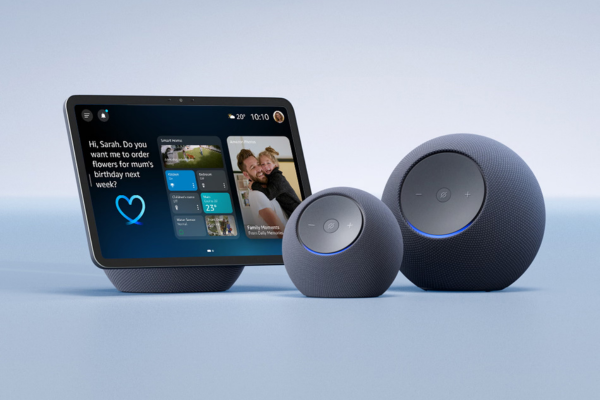
With Amazon’s Alexa+, Google’s Gemini for Home and Apple’s long-awaited home hub now reshaping the smart home market, small Australian integrators must find new ways to survive and thrive. Paul Skelton explains why the answer isn’t to compete on scale, it’s to compete on everything they can’t offer.
In every corner of the smart home industry, the footprint of big tech is expanding. Amazon, Apple, Google, Samsung and more, they’re not just offering devices anymore. They’re offering AI-native ecosystems.
ADVERTISEMENT
Thermostats no longer exist in isolation. Voice assistants are no longer novelties; they’re generative agents that can book a repair, write an email or narrate what’s been going on in your house while you were out.
These companies are embedding themselves deeper into the everyday home, combining hardware, software, cloud services and user accounts into one tightly controlled pipeline. And increasingly, they’re trying to own the installation and support layer too.
For small smart home businesses in Australia, this raises a confronting question: How do you compete when your competitor also owns the platform, the interface and the operating system?
Vertical integration is the playbook these tech giants have adopted. Every touchpoint in the customer journey – from product discovery to installation to support – is being pulled in-house. Amazon’s Alexa+ connects seamlessly with its Ring doorbells, eero mesh routers and Prime content; the assistant rolled out to all US households in early 2026 and is extending to Samsung TVs and third-party Alexa Built-in devices as we speak.
Apple users get Home app functionality baked into every iPhone, with easy links to iCloud, Apple TV and Siri – and a new HomePad-style home hub on the way, alongside rumoured Apple-designed cameras and a Face ID doorbell.
Google’s Nest devices now run Gemini for Home, with Gemini Live, AI camera descriptions and natural-language home automation sitting behind the new Google Home Premium subscription. Australia and New Zealand are among the launch markets for the new Gemini-powered Google Home Speaker this year. With each interaction, customers are nudged further into these closed ecosystems.
This is not just about convenience; it’s about lock-in. The more devices a customer buys from one ecosystem, the harder it becomes to switch. Scenes, routines and automations are tied to cloud accounts, interfaces are unified and familiar, and crucially, everything just works – within that brand’s system. For the average home owner, the path of least resistance becomes the path they follow.
Now consider what this means for a small integration company in Australia. You’re dealing with clients who are often introduced to smart homes through these consumer ecosystems. They buy a few smart bulbs from Bunnings, maybe a Google Nest speaker from JB Hi-Fi and suddenly they’re “doing automation.”
When they think about expanding their setup, their first instinct isn’t to call a professional; it’s to buy more of the same. And why wouldn’t they? The price is low. The marketing is polished. The promise is simple.
And that’s the threat. Not just that big tech is cheap and powerful, but that it defines the conversation. It frames expectations. It makes smart home technology seem easy, standardised and self-contained. If you’re a business that specialises in tailored design, cross-platform integration and long-term support, this perception erodes your value before you even enter the conversation.
But here’s where it turns: That perception only holds up until the system breaks.
The AWS outage in October 2025 was a useful reminder. For the better part of a day, Alexa went quiet, Ring cameras went dark, smart locks stopped responding and thermostats became uncontrollable across thousands of households.
A few months earlier, Amazon had pulled the Sengled Alexa skill altogether, effectively bricking voice control on a long list of WiFi bulbs that worked perfectly fine the day before. When a client’s smart home is entirely cloud-dependent and the cloud has a bad day, there’s no local fallback, no second path and no one on the end of a phone who knows their house.
Because while big tech sells standardisation, you sell personalisation. While they push convenience, you offer performance. And while they scale, you listen.
Clients may start with DIY devices, but the moment they want to do more – whole-home audio, lighting design, HVAC control, energy monitoring, remote support – they hit the limits. They discover that not all devices talk to each other. That app-based systems behave inconsistently. The support team doesn’t know what’s installed in their home. This is where integrators reclaim their ground.
As an integrator, your survival depends on leaning into what big tech can’t offer. That begins with lifecycle support. While platform providers focus on selling the next device or upselling the next subscription, you focus on maintaining the whole system. That means being there after installation – monitoring, updating, troubleshooting and ensuring the system continues to evolve with the client’s needs.
No call centre can replicate the value of a technician who knows the home, knows the family and knows the system intimately.
You can also outpace big tech on performance. Consumer-grade devices are optimised for mass-market use, not specialist applications. That means limited signal strength, lower-quality audio, fewer configuration options and inconsistent automation logic. You can deliver systems that are robust, custom-programmed and built to scale. Your networks don’t crash because someone moved a speaker. Your lighting scenes don’t misfire because a firmware update was pushed overnight. You’re in control… not the cloud.
Documentation is another competitive advantage. Most DIY systems are installed with little thought to future servicing. Wires aren’t labelled. Networks aren’t mapped. Devices aren’t catalogued. When things go wrong, the home owner is left guessing.
By contrast, a well-documented project, complete with wiring schedules, network diagrams and handover manuals, adds measurable value. It reassures the client. It simplifies support. And it makes future upgrades more predictable and cost-effective.
You also have the opportunity to lead on privacy and security. These are weak points for big tech. Cloud-based devices often require users to surrender control over their data. Voice assistants listen by default. Cameras stream to third-party servers. Premium AI features increasingly require a subscription and full cloud processing (Alexa+ confirmed there’s no local processing capability, and Google Home Premium routes AI camera features through Google’s servers).
For privacy-conscious clients or those in professions where confidentiality matters, this is a deal-breaker. You can offer local control, end-to-end encryption and systems built around standards-based protocols rather than vulnerable platforms. More importantly, you can explain how these features work and why they matter.
This is also where Matter has quietly shifted the ground under everyone’s feet. Three years into the specification and with over 790 member companies in the Connectivity Standards Alliance, Matter has gone from a marketing slide to a working reality. Matter 1.5 is the current release, device compatibility has lifted dramatically and Thread 1.4 (now required for all new border router certifications) is finally allowing vendors’ meshes to cooperate instead of fighting each other.
For integrators, that’s a gift. You can now specify a genuinely open, cross-platform kit without being locked to a single voice assistant and you can explain to clients why that matters for the next renovation, the next house and the next decade.
Education is your most underused tool. Big tech wins on messaging. Their pitch is simple, friendly and focused on lifestyle. Integrators too often lead with specs, standards and brands. If you want to compete, you need to translate technical capability into emotional value. Don’t sell a surveillance system, sell peace of mind. Don’t sell a lighting controller, sell the feeling of walking into a perfectly lit room. Don’t sell network redundancy, sell the confidence that everything will work when guests arrive.
This is what big tech does exceptionally well. Their products may be limited, but their story is consistent. You can learn from that. Build a clear message. Streamline your process. Refine your onboarding documents. Make your service feel like a premium experience from first contact to final sign-off.
You also need to position yourself as a partner, not just an installer. Smart homes are evolving. Systems must adapt to solar integration, home battery storage, electric vehicle (EV) charging, energy optimisation, assisted living and remote management. These are areas where the cookie-cutter approach falls short. You’re not just connecting gadgets. You’re designing infrastructure. Clients who understand this distinction will value you more and rely on you longer.
That said, the challenge is real. Vertical integration is only going to get worse. Amazon offers in-home installation services through Amazon Home. Google is embedding Gemini deeper into construction and builder partnerships. Apple is tightening its grip on the home with new hardware, a Gemini-backed version of Siri reportedly arriving this year and a homeOS trademark lodged around the world. You can’t compete on volume or ad spend. But you can compete on agility, detail and care.
You can also collaborate. The future of small integration businesses lies in networks. Form partnerships with like-minded professionals – architects, builders, designers and electricians. Share leads. Build referral systems. Work together on standards. Push for recognised training pathways. A fragmented industry is an easy target. A coordinated one has leverage.
You should also invest in your own brand. If big tech wins through global awareness, you win through local reputation. Build your website like it matters, because it does. Update your case studies. Get professional photography. Publish your values. When a potential client searches for “smart home integrator near me,” you want to be more than just another listing. You want to be the clear choice.
There’s no easy fix. Competing with trillion-dollar companies isn’t fair. But the clients who care about detail, reliability and support are not going to get that from a shelf at JB Hi-Fi. They’re going to look for someone they can trust. Be that someone.
If you focus on performance, service and trust, you’ll survive. If you build systems that scale, document them properly and maintain them long-term, you’ll stand out. If you speak in the language of outcomes, not inputs, you’ll convert more leads.
Smart home technology is not becoming obsolete; it’s becoming essential. The question is whether you want to be the person who installs it… or the person who defines what it means to do it properly.
-
ADVERTISEMENT
-
ADVERTISEMENT
-
ADVERTISEMENT
-
ADVERTISEMENT